General Information
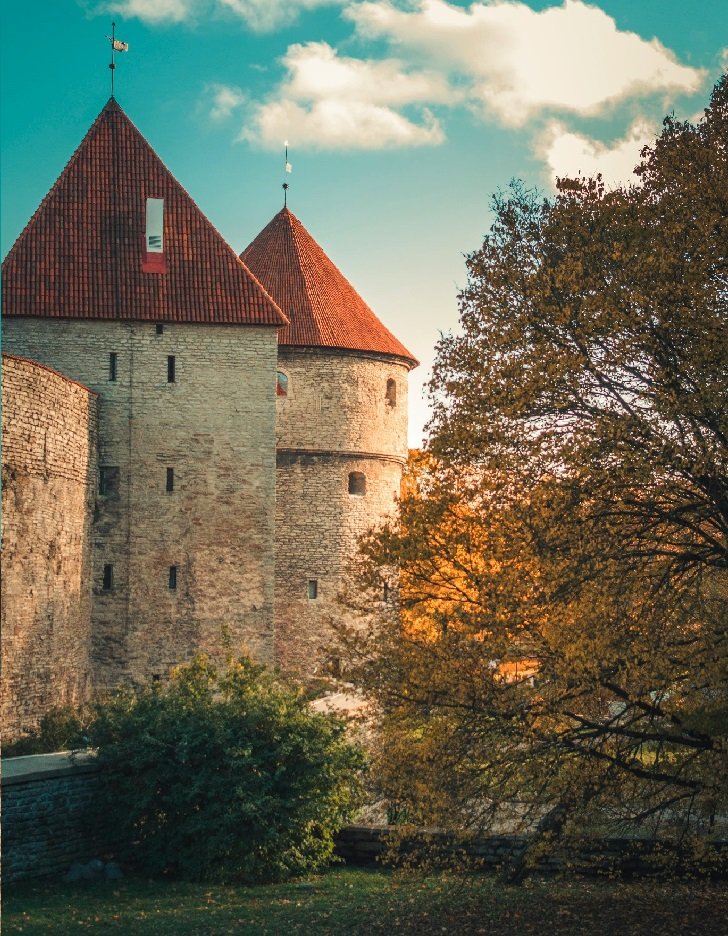
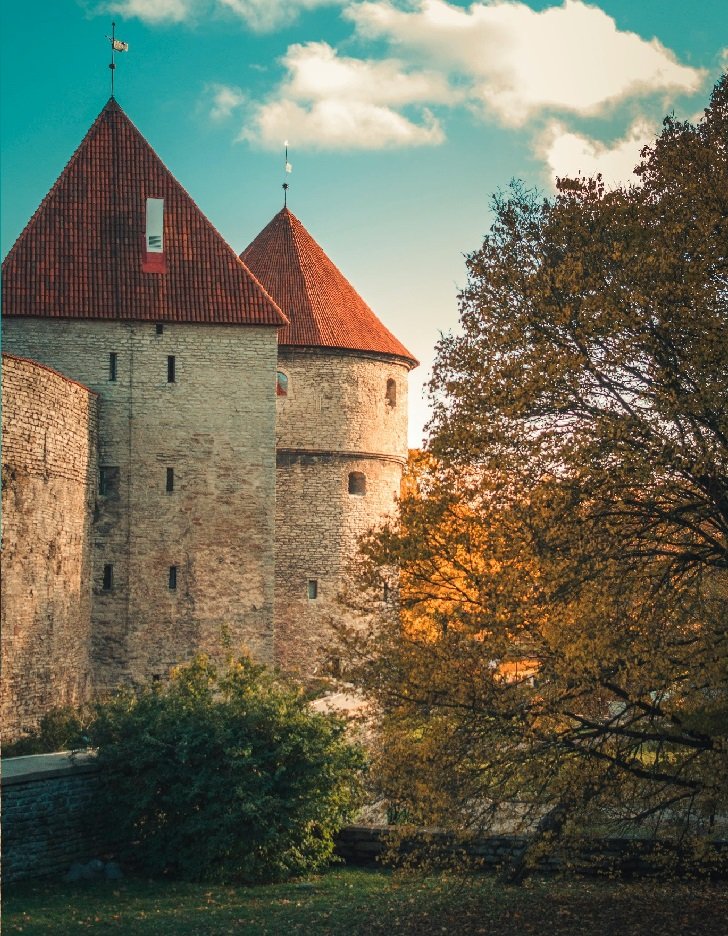
Estonia, officially the Republic of Estonia, is a country in the Baltic region of Northern Europe. It is bordered to the north by the Gulf of Finland across from Finland, to the west by the Baltic Sea across from Sweden, to the south by Latvia, and to the east by Russia. The territory of Estonia consists of the mainland, the larger islands of Saaremaa and Hiiumaa, and over 2,300 other islands and islets on the east coast of the Baltic Sea. Its capital city of Tallinn, along with the city of Tartu, are the country's two largest urban areas. The Estonian language, of the Finnic family, is the official language and the first language of the majority of nearly 1.4 million people. Estonia is one of the least populous member states of the European Union.
- Population: 1,350,000+
- Area: 45,228 km²
- Coordinates: Latitude: 59.416667938232, Longitude: 24.75
- Timezone: Timezone info not available
- Current Local Time: ailab
Latest Estonia News
news | ERR
Orange weather warning issued as heavy rain and storm winds forecast for Saturday
Environment Agency forecasts heavy rain, thunderstorms and wind gusts up to 20 meters per second over the weekend. Difficult weather conditions may lead to trees and branches breaking and cause power outages, grid operator Elektrilevi warns.
news | ERR
Lihtsad uudised 21. augustil
"Lihtsad uudised," meaning easy or simple news, is for anyone who wants to improve their Estonian language skills. Listen and read a selection of this week's news stories below.
Politics | ERR
Hendrik Johannes Terras: Where will agriculture's €546 million go?
Estonia's lower level of agricultural support was taken into account when calculating funding for the next EU budget period. This increased Estonia's allocation by roughly €546 million. The European Commission left it to Estonia to decide how to use this opportunity, writes Hendrik Johannes Terras.
Politics | ERR
Public opinion poll identifies Madise as top presidential choice
Estonian residents most prefer Chancellor of Justice Ülle Madise for president among the candidates presented so far, according to an Emor survey commissioned by ERR. Madise was the most popular choice among voters of every party except EKRE.
Society | ERR
Orange weather warning issued as heavy rain and storm winds forecast for Saturday
Environment Agency forecasts heavy rain, thunderstorms and wind gusts up to 20 meters per second over the weekend. Difficult weather conditions may lead to trees and branches breaking and cause power outages, grid operator Elektrilevi warns.
Society | ERR
Estonia pushes 112 accessibility deadline to 2027 as service falls short
Many still face barriers using Estonia's 112 emergency line, including deaf people and those unable to speak safely in an emergency, as full accessibility is pushed to 2027.
Postimees
JUHTKIRI ⟩ Vastutustundetu festival
„Kuosmanen tuli show’ mõttes lavale poolpaljalt sumoriietes, laulis oma ooperilaulja häälega Soome hümni, ütles, et see oli kunagi ka teie hümn ning hüüdis oma etteaste lõpetuseks: „Eesti vabaks!“ Lauluväljak möirgas talle vastu ja midagi suurt oli korraga nihkunud,“ meenutab Jüri Makarov tänase lehe muusikanurgas 1988. aasta Rock Summerit. Tollaste võimukandjate silmis oli soome rokkmuusiku käitumine väga vastutustundetu. Neil oli õigus: peagi oli Berliini müür pikali ja impeerium laiali. Kui me oleksime kõik käitunud pärast Stalini surma edasi sama vastutustundlikult, nagu meilt hiljuti nõuti – hoidnud üksteisest viie meetri kaugusele ja tellinud oma sardellid netipoest –, oleks Belgia 24. liiduvabariik, kõik viisaastakuplaanid kuhjaga täidetud ning meie järele ei luuraks mitte üksnes külmkapid, vaid ka kööginoad.
Postimees
HARDO PAJULA INTERVJUU JUHAN PARTSIGA ⟩ Sissejuhatus zombimajandusse
Zombidest – nõiaväel elus hoitud surnutest – ei kuule Tähenduse teejuhtide püsilugejad esimest korda. Lehe kaheksandas numbris usutletud kauaaegne finantsajakirjanik Jules Evans („Me kannatame oma uskumuste pärast“, 4.21) kirjeldas oma kogemust Londoni lockdown’ist: „Ma sõidan jalgrattal läbi hüljatud linna ja mõtlen, kas ma olen sattunud zombifilmi? Tegelikult oleme elanud zombifilmis juba mitmeid aastaid, sest meie vanad ideed ja nendele ehitatud süsteemid on olnud surnud juba mõnda aega. Meid ümbritsevad zombiinstitutsioonid. Need surid tegelikult võib-olla juba 2008. aastal.“
BBC News
Russian double-tap drone strike kills 15 in Ukrainian mall, officials say
At least 130 people, including 23 children, were also injured when the shopping centre was hit, according to the regional head.
BBC News
Rosenberg: Shortage of petrol but not patriotism as Russians feel growing impact of war
Drivers are waiting hours in fuel queues, as Moscow prepares to celebrate Russian Flag Day.
BBC News
Royal Mail misses delivery targets again but hails 'encouraging' signs
The struggling firm said it had improved its performance but missed regulator-set delivery targets.
BBC News
Canada 'should fight' as US trade deadline looms, Manitoba premier says
Premier Wab Kinew's comments signal a tough battle for Prime Minister Mark Carney to get buy-in from Canadians on a possible trade deal with the US.
POLITICO
‘Shameful’: Israel faces international backlash after closing probe into Gaza aid strike
The U.K., Australia and Canada on Friday called Israel’s decision not to pursue a criminal investigation into the deadly 2024 strike on a World Central Kitchen convoy “shameful.” The three governments said in a joint statement that “announcing this decision on World Humanitarian Day was particularly egregious,” adding that they had spent more than two years pressing Israel to examine the attack and hold those responsible to account. “This decision is both too little, and too late. The victims of this incident and their families deserve justice and accountability, and we will continue to seek answers on their behalf,” they added. Warsaw escalated the diplomatic pressure Thursday night by summoning Israel’s ambassador. Polish aid worker Damian Soból was among the seven people killed in the strike. Poland’s foreign ministry said in a post on X that it “does not accept the perpetrators’ evasion of legal and moral responsibility” and stressed that prosecutors in Przemyśl are still looking into the matter. Warsaw also demanded Israel provide “all necessary clarifications and materials” requested by Polish investigators. Israeli drones struck the World Central Kitchen convoy as it delivered food to civilians in Gaza, killing three Britons, an Australian, Soból, a dual U.S.-Canadian citizen and a Palestinian on April 1, 2024. The Israel Defense Forces described the attack at the time as a serious mistake and failure and pledged a thorough probe. Closing the case this week, the IDF said it determined “no reasonable suspicion of criminal misconduct that would justify the opening of a criminal investigation or the taking of additional measures against any of those involved in the incident.” “Partnership requires mutual respect,” Polish Foreign Minister Radosław Sikorski wrote on X Thursday evening, warning that the humanitarian catastrophe in Gaza and lack of accountability for the IDF’s “excessive use of force” were undermining public support “even in pro-Israel nations.”
POLITICO
France tackles dodgy condom problem
French health authorities warned Friday that more than 40,000 noncompliant condoms have been sold online in recent months, urging anyone who used affected products to get tested for sexually transmitted infections. The products were “likely to pose serious risks to the health and safety of users,” including unwanted pregnancies and STIs, France’s consumer-fraud watchdog, the DGCCRF, and its general directorate for health, or DGS, warned Friday. Platforms selling the items were told to “immediately remove the ads,” with 36 listings taken down. Several sites have since promised to review their screening process. According to the statement, investigators uncovered around 30 condom lines that lacked the EU’s required CE safety marking and third-party conformity checks. Most were sold by Asian vendors through major online marketplaces. But the problem didn’t stop online. Tests of CE-marked condoms sold through shops and pharmacies found two faulty products — one carrying a “risk of bursting,” another with “the presence of perforations.” Recalls launched in May and August covered around 260,000 units. France’s warning follows a wider European crackdown: In July this year, the EU’s anti-fraud office traced more than 200,000 counterfeit condoms circulating under the logo of a well-known brand to a common source in China. Products were seized in Spain, Romania and Serbia. The French alert lands as STIs are surging across Europe. There were nearly 100,000 confirmed cases of gonorrhea in Europe in 2023, a 31 percent increase compared to 2022 and an increase of more than 300 percent compared to 2014, the European Centre for Disease Prevention and Control reported. It was the highest recorded rate in Europe since the ECDC started its surveillance of STIs in 2009.
Al Jazeera – Breaking News, World News and Video from Al Jazeera
US Vice President JD Vance holds midterm election rally in Ohio hometown
The vice president's speech hinged heavily on economic themes, as voter confidence slips for Republican policies.
Al Jazeera – Breaking News, World News and Video from Al Jazeera
TikTok settles with US Justice Department for $400m over child privacy laws
TikTok and the US government settled to resolve allegations that the app violated children's online privacy laws.
Europe | The Guardian
Dutch regulator fines Uber $966m for automating driver suspensions
European regulators have imposed billions in penalties on US technology companies due to privacy, competition and digital market rulesThe Dutch data protection authority has fined Uber €825m ($966m) for deactivating driver accounts through automated systems without adequately informing them, according to a 17 August decision.The penalty would be the second-largest issued yet under Europe’s General Data Protection Regulation (GDPR). Continue reading...
Europe | The Guardian
The week around the world in 20 pictures
Wildfires in Europe, Russian strikes in Kyiv, the Meta trial and swimming in Gaza – the past seven days as captured by the world’s leading photojournalists Continue reading...
Europe
Ukraine seeks Musk’s help to hit Russian missile launchers
Starlink-equipped drones could strike targets up to 200km inside Russia
Europe
Italy’s MPS thinks three takeovers are better than one
Crunching two banks together is challenging, and takes time; to attempt the same feat with four calls for some truly magical thinking
.jpg)