General Information
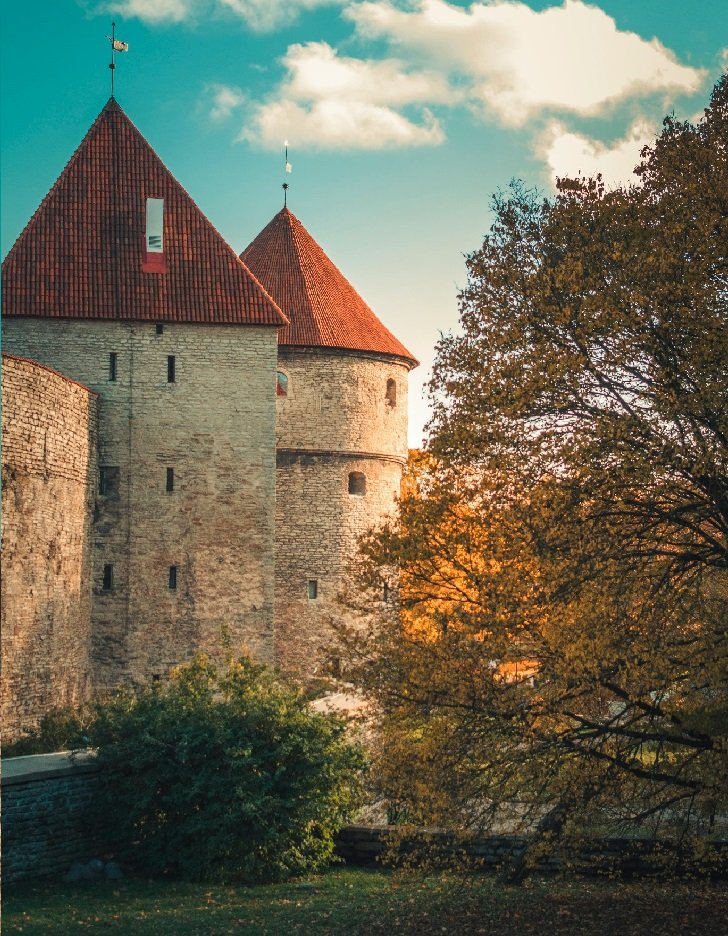
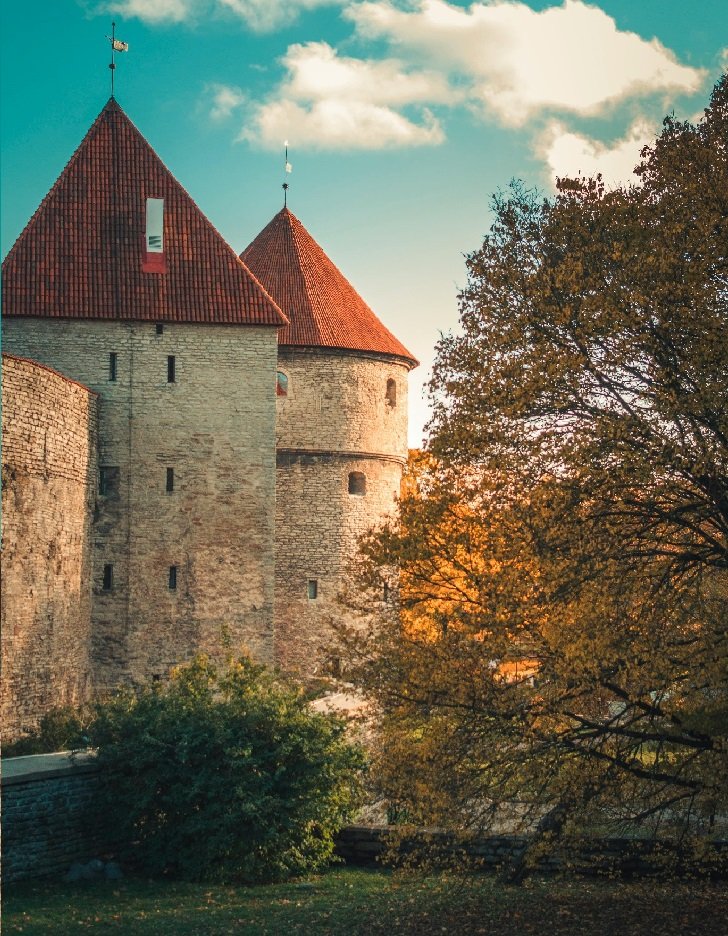
Estonia, officially the Republic of Estonia, is a country in the Baltic region of Northern Europe. It is bordered to the north by the Gulf of Finland across from Finland, to the west by the Baltic Sea across from Sweden, to the south by Latvia, and to the east by Russia. The territory of Estonia consists of the mainland, the larger islands of Saaremaa and Hiiumaa, and over 2,300 other islands and islets on the east coast of the Baltic Sea. Its capital city of Tallinn, along with the city of Tartu, are the country's two largest urban areas. The Estonian language, of the Finnic family, is the official language and the first language of the majority of nearly 1.4 million people. Estonia is one of the least populous member states of the European Union.
- Population: 1,350,000+
- Area: 45,228 km²
- Coordinates: Latitude: 59.416667938232, Longitude: 24.75
- Timezone: Timezone info not available
- Current Local Time: ailab
Latest Estonia News
news | ERR
Work ability appeals fall as success rate climbs, data shows
The number of appeals against work ability assessment decisions has steadily declined over the years, Minister of Economic Affairs Erkki Keldo (Reform) wrote in a letter to an MP.
news | ERR
Isamaa MP confirms deliberately not backing Ülle Madise nomination
Isamaa MP Helir-Valdor Seeder said he deliberately withheld his signature supporting Ülle Madise's recent presidential nomination, rejecting claims it was a technical error.
Politics | ERR
Isamaa MP confirms deliberately not backing Ülle Madise nomination
Isamaa MP Helir-Valdor Seeder said he deliberately withheld his signature supporting Ülle Madise's recent presidential nomination, rejecting claims it was a technical error.
Politics | ERR
Presidential hopeful Ülle Madise: I have never abandoned ship as captain
Presidential candidate Ülle Madise said on ETV's "Esimene stuudio" talk show that she is a conscientious and resolute leader in times of crisis who, like a ship's captain, would not abandon ship when difficulties arise.
Society | ERR
Work ability appeals fall as success rate climbs, data shows
The number of appeals against work ability assessment decisions has steadily declined over the years, Minister of Economic Affairs Erkki Keldo (Reform) wrote in a letter to an MP.
Society | ERR
Gallery: Estonia's timber Nature House taking shape on Tallinn waterfront
The glass and timber Nature House complex is nearing completion in Põhja-Tallinn, the future home of the Estonian Museum of Natural History and state environmental agencies.
Postimees
Seljaga lava poole: Dmitri Kotjuhi fotonäitus pöörab objektiivi lavalt publiku poole
3. septembril kell 17.00 avatakse Türi kultuurikeskuses Dmitri Kotjuhi fotonäitus «Seljaga lava poole». Näituse keskmes on kontserdipublik – fännid, nende emotsioonid, visuaalne kultuur ja spontaansed reaktsioonid.
Postimees
Balti riigid von der Leyenile: idapiiri julgeolek vajab 115 miljardit dollarit lisaraha
Balti riikide, Poola ja Soome volinikud esitasid Euroopa Komisjonile kirja, milles väljendatakse Balti riikide õhuruumi rikkumiste ja drooniintsidentide sagenemise tõttu kasvavat muret Venemaa agressiooni pärast, teatab Raadio Vaba Euroopa (RFE).
BBC News
Convicted Bosnian Serb war criminal Mladić dies aged 84
He was jailed for life in 2017 for genocide, war crimes and crimes against humanity during the wars in the ex-Yugoslavia in 1992-95.
BBC News
The monstrous crimes of Ratko Mladic, the 'Butcher of Bosnia'
The Bosnian Serb commander led a campaign of ethnic cleansing during the Bosnian conflict.
BBC News
What does the Meta settlement mean for the UK? Five things we learned
Other social media firms are yet to respond, while the debate from campaigners is far from over.
BBC News
Hackers steal data from millions of airport customers
About 8.7 million customers had their data accessed, Manchester Airport Group says.
POLITICO
Ratko Mladić, ‘butcher of Bosnia’, dies at the Hague aged 84
Ratko Mladić, the former Bosnian Serb military commander who was the architect of the 1995 Srebrenica massacre during the Bosnian War, has died aged 84, according to Serbian state media. The war criminal was serving a life sentence at The Hague for crimes against humanity, war crimes and genocide. “Ratko Mladić is dead, and there’s not much to say about it. The fact [that he’s dead] does not change much. It doesn’t bring back the dead. It doesn’t erase the mass graves. It doesn’t alter the verdicts. It doesn’t turn a criminal into a historical figure,” Emir Suljagić, the head of the Srebrenica Memorial Center, posted on X. The news was also reported by Reuters, citing a U.N. official. Known as the “Butcher of Bosnia”, Mladić led the Bosnian Serb army, which turned eastern Bosnia into the site of the worst crimes during the Yugoslav disintegration wars of the 1990s. Thousands of people, mainly Bosniaks and Bosnian Croats, were murdered, tortured and displaced by his armed forces with the goal of creating an ethnically pure territory for Serbs. Mladić went into hiding after the end of the Bosnian War in 1995 and remained a fugitive for nearly 16 years. He was arrested by Serbian authorities in 2011 and extradited to the U.N. tribunal in The Hague, which sentenced him to life in prison in 2017. In recent years, Mladić had repeatedly sought to have his life sentence overturned, citing his advanced age and deteriorating health. The court rejected his appeals as recently as Aug. 20, and he remained at the UN detention facility until his death.
POLITICO
EU budget must bankroll Europe’s independence, von der Leyen says
PARIS — The EU’s next seven-year budget needs to finance the bloc’s independence from foreign powers, Ursula von der Leyen said, as six countries led by Germany press to cut hundreds of billions of euros from the spending package. Von der Leyen’s call for a bigger investment program comes as the bloc seeks to reduce its reliance on Chinese supply chains and critical raw materials, American technology and imported fossil fuels. “The next budget will be the financial arm for our independence,” the European Commission president said in a speech to France’s business lobby MEDEF in Paris on Thursday. The Commission has proposed a budget of almost €2 trillion. Germany and five allies — Austria, Denmark, Finland, the Netherlands and Sweden — are calling for cuts of several hundred billion euros. Italy and Spain are leading a separate group seeking a larger budget. The size of the budget will determine how much money the EU can put behind von der Leyen’s economic agenda, including investment in strategic industries, energy and artificial intelligence — sectors she says are essential to reducing Europe’s dependence. “With over €450 billion from the European Competitiveness Fund and the Horizon Europe program, we will support the entire chain — from research to innovation, from laboratories to business, and from initial prototypes to industrial production,” von der Leyen said, referring to the EU’s proposed fund for strategic industries and its research-and-innovation program. “Europe cannot set new ambitions without providing the means to finance them,” she added. The spending proposal is facing sustained opposition from German Chancellor Friedrich Merz and his allies, who argue that the increase is unaffordable while national governments are cutting back. “The current proposals call for an increase of up to 60 percent,” Merz said in a joint statement with the five countries later on Thursday. “In times of budget consolidation across all member states, this is simply unaffordable,” he said. “The proposals must be cut by several hundred billion. And these cuts will have to affect all areas.” European Council President António Costa is touring national capitals until the end of September to line up support for a compromise. The next phase of negotiations will force governments to confront the core trade-offs: the size of the budget, national contributions and how much money goes to competing priorities. Governments want to settle the package by the end of the year, before national election campaigns in several EU countries narrow their room for maneuver. Hans von der Burchard contributed reporting.
Al Jazeera – Breaking News, World News and Video from Al Jazeera
Six months after US strike on Iran school, parents still grieve
Six months after a US missile strike on an Iranian school killed at least 170 people, most of them children.
Al Jazeera – Breaking News, World News and Video from Al Jazeera
Israeli settlers targeting Palestinian factories to force workers off land
Settler violence threatens to collapse the fragile Palestinian economy.
Europe | The Guardian
Russia says UK ‘playing with fire’ amid reports CIA chief has warned Kremlin not to attack Nato
Moscow threatens retaliation after Andy Burnham says UK will help Ukraine start producing long-range missilesRussia has said it could retaliate against the UK for its support of Kyiv by striking military targets inside and outside Ukraine, amid reports that the director of the CIA warned the Kremlin against attacking Nato during a secretive visit this week.Andy Burnham, Britain’s prime minister, said on Monday the UK would allow Kyiv access to classified technology to start its own production of Storm Shadow long-range cruise missiles. Maria Zakharova, Russia’s foreign ministry spokesperson, said on Thursday Britain and France were “playing with fire”. Continue reading...
Europe | The Guardian
Hiker reunited with backpack 60 years after he fell into a glacier in Austria
Bag, camera and pipe belonging to 86-year-old are latest relics uncovered as glaciers melt due to global heatingAn 86-year-old mountaineer has been reunited with his backpack and climbing equipment after the kit emerged from a melting glacier in Austria – more than 60 years after he was forced to leave them there.Items including an ice axe, camera and a pipe dating from the 1950s or 1960s were discovered on the Sulztalferner glacier in Austria’s Tyrol region, at an altitude of 2,955 metres (9,700ft) above sea level, by a hiker in July. Continue reading...
Europe
Minutes from ECB’s July meeting more positive on inflation outlook
Lack of second-round inflation effects will not stop central bank from raising interest rates again in September
Europe
Flat owners win ‘right to manage’ case at UK Supreme Court
Lawyers say ruling strips freeholders of a powerful tool to derail resident-led takeovers
.jpg)